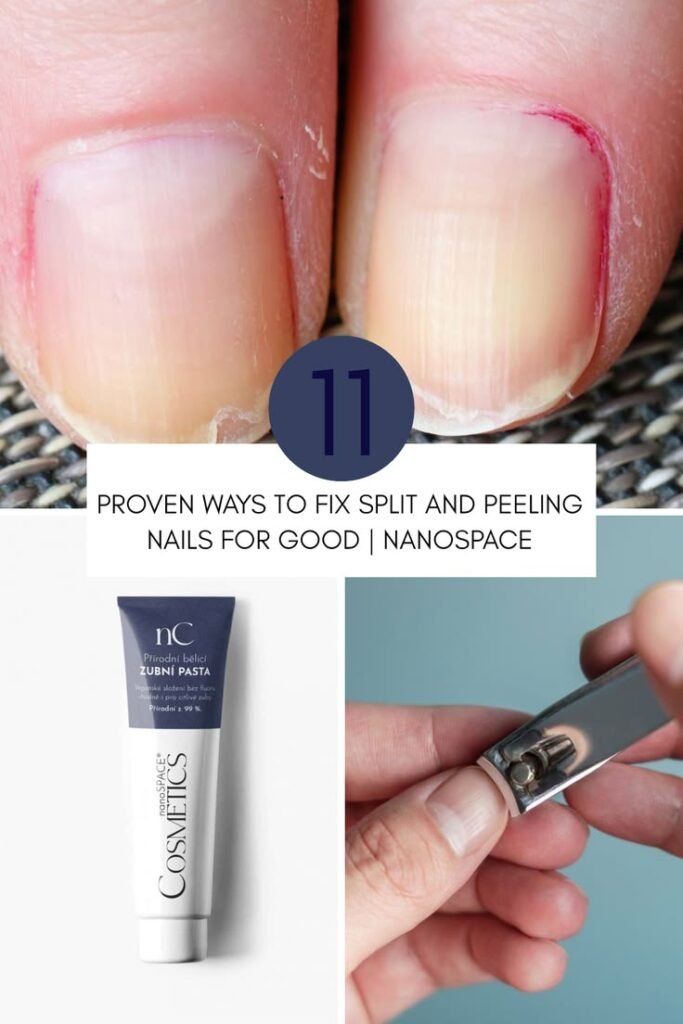

You finally sit down to paint your nails, you carefully apply your base coat, and just as you are admiring your work, you notice it: the edge of your nail is lifting in a thin, sheer layer. Peeling nails are incredibly frustrating, unsightly, and can sometimes even be painful if the peeling goes too deep.
If you find yourself constantly asking, why are my nails peeling, you are definitely not alone. It is one of the most common nail complaints dermatologists and nail technicians hear every single day.
The medical term for this condition is onychoschizia, which is just a fancy word for the splitting or peeling of the outer layers of the nail plate. Your nails are not just dead cells; they are complex structures made of densely packed keratin proteins. When those protein layers lose their ability to bind together, they separate, resulting in peeling.
To fix the problem, you have to understand what is causing it. Here is a deep dive into the exact reasons your nails are peeling and the actionable steps you can take to restore them to a strong, smooth, and healthy state.
The Anatomy of a Peeling Nail

To understand why are my nails peeling, it helps to visualize how a nail is built. Think of your fingernail like a shingled roof. The nail plate is made up of dozens of microscopic layers of keratin, layered flat on top of one another.
These layers are held together by natural oils, lipids, and water. When your nails are healthy, these layers are firmly sealed together, creating a hard, smooth surface. However, when your nails are deprived of moisture, exposed to harsh chemicals, or physically damaged, the “glue” holding those shingles together breaks down. The top layers then begin to lift and peel away from the layers underneath.
The Top 6 Causes of Peeling Nails
If your nails are constantly splitting into layers, one (or a combination) of these six culprits is almost always to blame.
1. Constant Exposure to Water (The #1 Cause)

This surprises a lot of people, but water is actually the biggest enemy of your nails. Your nails are incredibly porous—much more so than your skin. When you submerge your hands in water (like when washing dishes, taking long baths, or swimming), your nails absorb the water and expand.
When you dry off, the water evaporates, and the nails contract. Over time, this constant expanding and contracting puts immense mechanical stress on the keratin layers, causing them to separate and peel. If your job requires you to wash your hands constantly or work with water, your nails will inevitably suffer.
2. Using Harsh Chemicals and Cleaners

Everyday household cleaning products—dish soaps, laundry detergents, bathroom cleaners, and surface sprays—contain harsh chemicals like solvents, sulfates, and alkalines. These chemicals strip away the natural protective oils on your nails and hands. Without those oils, the nail plate dries out, becomes brittle, and the layers begin to delaminate (peel).
3. The Wrong Filing Technique

Many people do not realize that they are actively causing their nails to peel by using the wrong tools. Traditional cardboard emery boards are highly abrasive. When you saw back and forth with an emery board, you are literally tearing the microscopic keratin layers apart at the tip of your nail. A few days later, those torn layers will peel off on their own.
4. Over-Filing or Excessive Buffing

In an attempt to make the surface of the nail smooth, some people buff their nails aggressively with a heavy-duty buffer block. While light buffing is fine, taking off too much of the top layer of the nail plate compromises its structural integrity. Once the top protective layer is gone, the lower layers are exposed and will easily peel.
5. Nutritional Deficiencies

Your body needs specific building blocks to produce strong, healthy keratin. If your diet is lacking, your nails will be the first to show it.
- Iron Deficiency (Anemia): Low iron levels reduce the amount of oxygen getting to your nail matrix, resulting in weak, flat, peeling nails that often have vertical ridges.
- Biotin Deficiency: Biotin (Vitamin B7) is crucial for keratin infrastructure. A lack of biotin leads to brittle, splitting nails.
- Dehydration: If you are not drinking enough water, your entire body—including your nails—becomes chronically dry from the inside out.
6. Environmental Dryness and Weather

Living in a dry climate, or experiencing the cold, dry air of winter (especially in areas with indoor heating), sucks the moisture right out of your skin and nails. If you are not actively replacing that moisture with heavy creams and oils, your nails will become dry, stiff, and prone to peeling.
How to Fix Peeling Nails: The 5-Step Repair Routine
Once you identify the cause, you need to implement a targeted repair routine. Fixing peeling nails is not an overnight process; it takes about 3 to 4 weeks for a completely new, healthy nail to grow out from the cuticle. However, if you follow these steps, you will stop the peeling almost immediately.
Step 1: Trim Them Down Immediately
Do not try to save length if your nails are actively peeling. The peeling edge will catch on your hair, clothes, or keyboard and rip backward, tearing the nail further down into the nail bed. Use a sharp nail clipper to clip all your nails down to a short, manageable length.
Step 2: Switch to a Glass Nail File
Throw away your cardboard emery boards immediately. Go online or to a beauty supply store and buy a glass nail file (also called a crystal file). Glass files have a perfectly smooth, micro-grit surface. Instead of tearing the keratin layers, they gently seal the edges of the nail together as you file. File in one gentle direction, moving from the outside edge toward the center.
Step 3: Daily Jojoba Oil Treatments
This is the most critical step for fixing splitting nails. You must replace the lost moisture and lipids. As mentioned earlier, jojoba oil is the only oil with molecules small enough to actually penetrate the nail plate. Apply 2 to 3 drops of pure jojoba oil to each nail, rubbing it into the cuticle, the nail bed, and the free edge. Do this at least twice a day. For severe peeling, you can even apply a heavy layer before bed and sleep with cotton gloves on to lock it in.
Step 4: Protect Your Hands from Water and Chemicals
You must break the cycle of wet/dry expansion. Buy a pair of durable rubber gloves and wear them every single time you wash dishes, use cleaning chemicals, or handle wet clothes. The less water your nails absorb, the faster they will heal.
Step 5: Use a Strengthening Barrier Base Coat
While your nails are healing, protect them from the environment by applying a high-quality nail strengthener or a thick, barrier-building base coat. This acts like a temporary shield over the damaged layers, preventing them from catching on things and peeling further. Reapply the base coat every few days to maintain the seal.
When to See a Doctor About Peeling Nails
In most cases, peeling nails are entirely cosmetic and easily fixed with the home care routine listed above. However, in rare cases, chronically peeling nails can be a symptom of an underlying medical condition.
You should consult a dermatologist or your primary care doctor if:
- The peeling is accompanied by a change in nail color (yellowing, greenish discoloration, or white streaks).
- Your nails are thickening, crumbling, or separating from the nail bed (which could indicate a fungal infection).
- The peeling is severe and happens despite strict adherence to a good nail care routine.
- You notice other symptoms like extreme fatigue, hair loss, or pale skin, which could point to severe anemia or a thyroid disorder (like hypothyroidism, which frequently causes brittle, peeling nails).
Habits to Avoid While Your Nails Heal
To ensure your nails recover as quickly as possible, you need to stop a few destructive habits.
- Stop using them as tools: Never use your nails to open cans, scrape off labels, or pry things open. Use the pad of your finger or a dedicated tool.
- Stop getting acrylics or gels: If your nails are already peeling, the harsh filing required for acrylic or gel applications will only make the damage worse. Give your natural nails a 3 to 6 month break from any enhancements.
- Do not peel off polish: Even if your regular nail polish starts to chip, do not pick at it. Peeling off polish almost always takes a layer of your natural nail with it. Always use a gentle, acetone-free nail polish remover.
Frequently Asked Questions (FAQs)
Can vitamin deficiencies cause my nails to peel? Yes, absolutely. Deficiencies in Iron, Biotin (Vitamin B7), Zinc, and overall dehydration are leading internal causes of peeling nails. If you suspect a deficiency, blood work from your doctor can confirm it, and a simple daily supplement or diet change can reverse the damage.
Is it normal for nails to peel during pregnancy? Yes. Pregnancy causes massive hormonal shifts and changes in blood volume. Many women experience faster nail growth during pregnancy, but the rapid growth can sometimes lead to weaker, flakier nails if the body’s nutrient intake isn’t increased to match. Prenatal vitamins often help counteract this.
Does gel polish cause nails to peel? Gel polish itself doesn’t cause the nail plate to peel internally. However, the removal process (if done incorrectly by peeling off the gel) or the aggressive electric filing done during the salon application can severely damage the top layers of the nail, resulting in peeling.
How long does it take for peeling nails to grow out? Fingernails grow about 3.5 millimeters per month. If you start a strict oiling and protection routine today, the new nail growing from under your cuticle will be strong and healthy. However, it will take approximately 4 to 6 months for that healthy growth to completely replace the damaged, peeling nail from cuticle to tip.
Conclusion
Dealing with flaky, splitting nails is incredibly annoying, but you do not have to live with it forever. Figuring out why are my nails peeling usually comes down to analyzing your daily habits—specifically how much water and chemicals they are exposed to, and how you are filing them.
By clipping off the damage, switching to a glass file, aggressively moisturizing with jojoba oil, and wearing gloves when doing wet work, you can completely repair your nail plate. Be patient with the growing process, treat your hands with care, and before long, you will have strong, smooth nails that you can be proud of!